Spiritual Life at Vedha Chakra
Daily Rituals & Poojas
Every morning at Vedha Chakra begins with the vibration of Vedic mantras, Sandhyavandanam, and divine stotra chanting. The central Devata Mandir becomes the heart of all action as students and faculty participate in poojas, aartis, and bhajans together, creating a spiritually charged atmosphere that continues throughout the day.
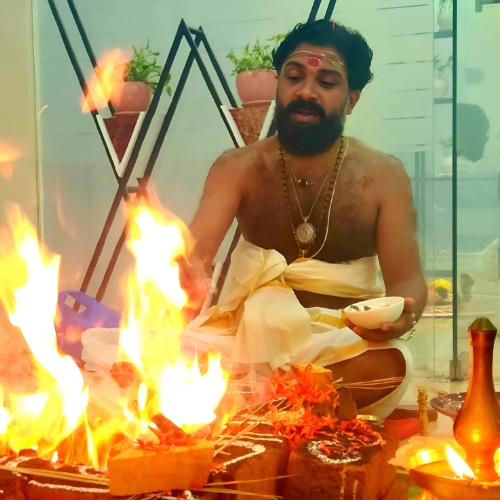
Yagna Shaala and Sacred Fire Ceremonies
The Yagna Mandapa hosts regular homas and Vedic fire rituals such as Agnihotra, Rudra Homa, and Lakshmi Kubera Yagam. These sacred offerings not only purify the space but also offer students a chance to witness and perform rituals as part of their living education under the guidance of experienced Acharyas.
Dhyana Mandir – The Hall of Inner Silence
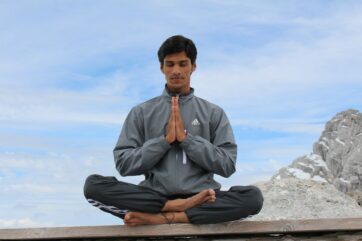
- Spiritual life is incomplete without silence and self-reflection. The Dhyana Mandir provides a serene and sacred space where students immerse themselves in meditation techniques drawn from Yogic, Siddha, and Vedantic traditions.
- Daily dhyana sessions nurture mindfulness, emotional balance, and clarity of thought. Special retreats on mantra japa, pranayama, and chakra meditation are organized to deepen inner awakening. The Mandir also serves as a sanctuary for group satsangs, silence observances (mauna vrata), and contemplative practices that harmonize body, mind, and spirit.
Guru-Shishya Parampara
Learning at Vedha Chakra follows the timeless tradition of Guru-Shishya Parampara. Students reside close to their Gurus, absorbing spiritual teachings through observation, service, and dialogue. This connection forms the foundation for character development and inner transformation.
Bharatiya Utsav Celebrations
Festivals are lived with full devotion and cultural richness at Vedha Chakra. Celebrations such as Mahashivratri, Navaratri, Guru Poornima, and Gita Jayanti are not just observed, but spiritually lived — with temple rituals, Vedic chants, cultural performances, and satsangs that bind the community in divine joy.
Sacred Environment
The university is built like an ashram — naturally aligned with Vastu, filled with sacred trees, herbal gardens, cow shelters, and clean sattvic food from Annapurna Bhavan. Every element, from architecture to food, is designed to support a pure, spiritual lifestyle.
Blogs
Sara Jhonson
Natali Vids
Peter Defne